Today's scripture passage is from Ecclesiastes 3:1-11. The title of this passage of scripture in the NIV version is "A Time for Everything" which was what I remembered from reading it many times it the past. But in the NRSVCE version which I read today it is called "Everything Has Its Time" which I think is a bit better. Of course in the original language there is no title so the title created in a translation is meant to summarize what this entire passage says. I think the Message (MSG) translation gives an even better summary of the passage: "There’s a Right Time for Everything". It begins in verse 1: "There’s an opportune time to do things, a right time for everything on the earth" and this is where I begin my reflection today.
I have now been retired for more than 2 years. Right before I decided to send in my letter of retirement, I went through a bit of existential crisis. Yes I turned 65 in 2016 but the university did not have a mandatory retirement age. I loved my work and the people I worked with. I enjoyed my clinical practice and had a very good relationship with the majority of my patients. But it was an opportune time. A resident I trained share a very similar practice style and my patients generally liked him. He is a Christian also. He worked hard after graduation until he was offered a faculty position. I can't think of a better person available at that time to take over my academic practice. So I did not feel I was abandoning my patients (I had to do that twice in the past!).
"A right time to hold on and another to let go,"
Moreover, I was finding I needed more time to nurture my spiritual life. I took a 20% income cut back in January of 2013 to reduce my work hours to 4 days a week in order to do more serious scripture studying and to start writing this blog (it's hard to believe I have been doing this for more than 5 years and have already published 264 blogs!). I found the extra time very helpful to discipline myself in reading and writing on spiritual thing (although with academic work I didn't always get my Friday off!). So in 2016 when my request for a further 20% reduction in work was denied I knew it was time to retire.
"A right time to plant and another to reap,"
But I still felt the need to do something to use the gifts God has given me (and to feel needed!!). I applied for two positions (both half time work) but got turned down. My wife told me later she was happy I didn't get any of the two jobs because she didn't think they suited me. Well what should I do then?
"A right time to search and another to count your losses,"
I started to look for work that I knew nobody wanted to do. Well, there are plenty - the Transition Bed Programs, the Convalescent Bed Programs etc. I knew these work were not profitable enough to attract family physicians so my intention was to build them up to the point that it would be both meaningful and financially sustainable. I also increased my work at the Nursing Home. So along with my bi-weekly volunteer work at the Refugee clinic and BBQ for the poor on Fridays I was busy enough.
"A right time to cry and another to laugh,
A right time to lament and another to cheer,
A right time to make love and another to abstain,
A right time to embrace and another to part,"
Well more than two years have gone by since my retirement. Was it the right decision? Absolutely YES!! I am finding that my work which focuses on the care of the elderly is meaningful and fulfilling. My faith has grown and (my wife told me) I am more content and generally more pleasant! And along the way I have reverted back to my original Catholic faith! I attend daily mass as often as 4 or 5 times a week and I paddle my bike to my 4 or 5 work places to stay fit. I have signed up for more volunteer work (I am the chairman of two not-for-profit boards, one Christian and another non-Christian). I have already transitioned one Transition Bed Program to a young physician and I look forward to transitioning more of my work to a young Christian graduate in January. My involvement in eHealth is increasing and I hope to finish what I started in my OSCAR project (worldoscar.org).
Praise God! There’s a Right Time for Everything.
But in the end, does it really make a difference what anyone does? I’ve had a good look at what God has given us to do—busywork, mostly. True, God made everything beautiful in itself and in its time—but he’s left us in the dark, so we can never know what God is up to, whether he’s coming or going. I’ve decided that there’s nothing better to do than go ahead and have a good time and get the most we can out of life. That’s it—eat, drink, and make the most of your job. It’s God’s gift.
"For I am convinced that neither death, nor life, nor angels, nor rulers, nor things present, nor things to come, nor powers, nor height, nor depth, nor anything else in all creation, will be able to separate us from the love of God in Christ Jesus our Lord"
(Romans 8:38-39)
"That is why I am suffering as I am. Yet this is no cause for shame, because I know whom I have believed, and am convinced that he is able to guard what I have entrusted to him until that day."
(2 Timothy 1:12)
Friday, 28 September 2018

Friday, 21 September 2018
"I desire mercy, not sacrifice" - lesson from the Call of Matthew
This morning I prayed:
Lord,
you showed your great mercy to Matthew the tax-collector
by calling him to become your apostle.
Supported by his prayer and example,
may I always answer your call
and live in close union with you.
Through my Lord Jesus Christ, your Son,
who lives and reigns with you in the unity of the Holy Spirit,
one God, for ever and ever.
Amen.
Today we celebrate the Feast of Saint Matthew, apostle and evangelist. This is a short Bio of him:
"St. Matthew the Apostle (1st c.) was a Jew who also went by the name of Levi. He was from Galilee and served in Capernaum as a tax collector for Herod Antipas before becoming a disciple of Jesus. It was in the home of St. Matthew that Jesus dined with the "sinners and tax collectors." Under Jesus' influence St. Matthew was led to repentance for the evil he had done as a tax-collector, a position despised by his fellow Jews. He repaid those he cheated four-fold, sold all his possessions, and followed Christ as one of the twelve Apostles. St. Matthew preached among the Jews for fifteen years following the Resurrection and Ascension of Jesus. He is the author of the Gospel that bears his name, which he wrote to convince the Jews that Jesus Christ was the Messiah promised to Israel. According to tradition, St. Matthew the Apostle brought the Gospel to Syria, Media, Persia, Parthia, and finished his preaching in Ethiopia with a martyr’s death. He is the patron of guards, bankers, accountants, security forces, and stock brokers. His feast day is September 21st."
Today's scripture reading (Matthew 9:9-13):
As Jesus was walking along, he saw a man called Matthew sitting at the tax booth; and he said to him, “Follow me.” And he got up and followed him.
And as he sat at dinner in the house, many tax collectors and sinners came and were sitting with him and his disciples. When the Pharisees saw this, they said to his disciples, “Why does your teacher eat with tax collectors and sinners?” But when he heard this, he said, “Those who are well have no need of a physician, but those who are sick. Go and learn what this means, ‘I desire mercy, not sacrifice.’ For I have come to call not the righteous but sinners.”
To go a little deeper into this passage of scripture I was reading "A sermon by St Bede the Venerable: Jesus saw him through the eyes of mercy and chose him". The paragraph that stood out for me is this:
"He saw the tax collector and, because he saw him through the eyes of mercy and chose him, he said to him: Follow me. This following meant imitating the pattern of his life—not just walking after him. Saint John tells us: Whoever says he abides in Christ ought to walk in the same way in which he walked. (1 John 2:6)"
When do I look at someone through the eyes of mercy? If I had been called to follow Jesus how can I walk as Jesus walked?
In a couple of hours I will be barbecuing for the poor at the "De Mazenod Door*". There will be nearly 300 people lining up for a free hamburger and a hot dog. Will I take pauses here and there to look at their faces with the eyes of mercy like Jesus? Will this act of compassion lead many to Jesus?
When I tell people I spend my Friday lunch serving the poor, I am praised for making a "sacrifice" (instead of making more money). I am reminded that if I do this without the eyes of mercy I will not please God. May I learn this lesson well, not only on Fridays, but for the rest of the week, till the end of my days.
*(Named De Mazenod Door after St. Eugene de Mazenod, the founder of the Oblates of Mary Immaculate and the patron saint and intercessor for the poor, the church ministry was created to provide sustenance for anyone who comes knocking at the church office door.)
Other useful reading for this blog:
1. Bible Study Tools - Matthew Henry's Commentary on the Whole Bible
2. Saint Matthew, Pope Francis and the Venerable Bede
Lord,
you showed your great mercy to Matthew the tax-collector
by calling him to become your apostle.
Supported by his prayer and example,
may I always answer your call
and live in close union with you.
Through my Lord Jesus Christ, your Son,
who lives and reigns with you in the unity of the Holy Spirit,
one God, for ever and ever.
Amen.
Today we celebrate the Feast of Saint Matthew, apostle and evangelist. This is a short Bio of him:
"St. Matthew the Apostle (1st c.) was a Jew who also went by the name of Levi. He was from Galilee and served in Capernaum as a tax collector for Herod Antipas before becoming a disciple of Jesus. It was in the home of St. Matthew that Jesus dined with the "sinners and tax collectors." Under Jesus' influence St. Matthew was led to repentance for the evil he had done as a tax-collector, a position despised by his fellow Jews. He repaid those he cheated four-fold, sold all his possessions, and followed Christ as one of the twelve Apostles. St. Matthew preached among the Jews for fifteen years following the Resurrection and Ascension of Jesus. He is the author of the Gospel that bears his name, which he wrote to convince the Jews that Jesus Christ was the Messiah promised to Israel. According to tradition, St. Matthew the Apostle brought the Gospel to Syria, Media, Persia, Parthia, and finished his preaching in Ethiopia with a martyr’s death. He is the patron of guards, bankers, accountants, security forces, and stock brokers. His feast day is September 21st."
Today's scripture reading (Matthew 9:9-13):
As Jesus was walking along, he saw a man called Matthew sitting at the tax booth; and he said to him, “Follow me.” And he got up and followed him.
And as he sat at dinner in the house, many tax collectors and sinners came and were sitting with him and his disciples. When the Pharisees saw this, they said to his disciples, “Why does your teacher eat with tax collectors and sinners?” But when he heard this, he said, “Those who are well have no need of a physician, but those who are sick. Go and learn what this means, ‘I desire mercy, not sacrifice.’ For I have come to call not the righteous but sinners.”
To go a little deeper into this passage of scripture I was reading "A sermon by St Bede the Venerable: Jesus saw him through the eyes of mercy and chose him". The paragraph that stood out for me is this:
"He saw the tax collector and, because he saw him through the eyes of mercy and chose him, he said to him: Follow me. This following meant imitating the pattern of his life—not just walking after him. Saint John tells us: Whoever says he abides in Christ ought to walk in the same way in which he walked. (1 John 2:6)"
When do I look at someone through the eyes of mercy? If I had been called to follow Jesus how can I walk as Jesus walked?
In a couple of hours I will be barbecuing for the poor at the "De Mazenod Door*". There will be nearly 300 people lining up for a free hamburger and a hot dog. Will I take pauses here and there to look at their faces with the eyes of mercy like Jesus? Will this act of compassion lead many to Jesus?
When I tell people I spend my Friday lunch serving the poor, I am praised for making a "sacrifice" (instead of making more money). I am reminded that if I do this without the eyes of mercy I will not please God. May I learn this lesson well, not only on Fridays, but for the rest of the week, till the end of my days.
*(Named De Mazenod Door after St. Eugene de Mazenod, the founder of the Oblates of Mary Immaculate and the patron saint and intercessor for the poor, the church ministry was created to provide sustenance for anyone who comes knocking at the church office door.)
Other useful reading for this blog:
1. Bible Study Tools - Matthew Henry's Commentary on the Whole Bible
2. Saint Matthew, Pope Francis and the Venerable Bede
Friday, 14 September 2018
Exaltation of the Holy Cross
"For the message of the cross is foolishness to those who are perishing, but to us who are being saved it is the power of God."
(1 Corinthians 1:18)
"In your relationships with one another, have the same mindset as Christ Jesus:
Who, being in very nature God, did not consider equality with God something to be used to his own advantage; rather, he made himself nothing by taking the very nature of a servant, being made in human likeness. And being found in appearance as a man, he humbled himself by becoming obedient to death—
even death on a cross!
Therefore God exalted him to the highest place and gave him the name that is above every name, that at the name of Jesus every knee should bow, in heaven and on earth and under the earth, and every tongue acknowledge that Jesus Christ is Lord, to the glory of God the Father." (Philippians 2:5-11)
Today is the "Feast of the Exaltation of the Holy Cross". Scripture readings are from Numbers 21:4b-9, Philippians 2:6-11, and John 3:13-17. These passages tie together a recurrent theme in scripture: man's sin leading to dire consequences; God's intervention, not what you would expect(!); and man's response - by faith and by our action, to receive salvation. It's interesting that Jesus used the image of the bronze serpent on a stick to predict what He was going to do to bring salvation to the world: "And as Moses lifted up the serpent in the wilderness, so must the Son of Man be lifted up, that whoever believes in him may have eternal life." (John 3:14-15). Both the apostle John who wrote this gospel and Nicodemus, to whom Jesus was speaking, would understand later that Jesus was talking about the cross that would be "lifted up", the cross where His body would be hung.
The serpent on a stick as a medical symbol of healing probably has its origin to this Moses story, “Make a snake and put it up on a pole; anyone who is bitten can look at it and live.” (Numbers 21:8). However, there is also another version of the story tied to Greek Mythology.
Saint Andrew of Jerusalem (8th-century bishop and theologian) wrote this beautiful piece: "The cross is Christ's glory and triumph" which I will reproduce with my highlight here:
"We are celebrating the feast of the cross which drove away darkness and brought in the light. As we keep this feast, we are lifted up with the crucified Christ, leaving behind us earth and sin so that we may gain the things above. So great and outstanding a possession is the cross that he who wins it has won a treasure. Rightly could I call this treasure the fairest of all fair things and the costliest, in fact as well as in name, for on it and through it and for its sake the riches of salvation that had been lost were restored to us. Had there been no cross, Christ could not have been crucified. Had there been no cross, life itself could not have been nailed to the tree. And if life had not been nailed to it, there would be no streams of immortality pouring from Christ’s side, blood and water for the world’s cleansing. The legal bond of our sin would not be cancelled, we should not have attained our freedom, we should not have enjoyed the fruit of the tree of life and the gates of paradise would not stand open. Had there been no cross, death would not have been trodden underfoot, nor hell despoiled.
Therefore, the cross is something wonderfully great and honourable. It is great because through the cross the many noble acts of Christ found their consummation – very many indeed, for both his miracles and his sufferings were fully rewarded with victory. The cross is honourable because it is both the sign of God’s suffering and the trophy of his victory. It stands for his suffering because on it he freely suffered unto death. But it is also his trophy because it was the means by which the devil was wounded and death conquered; the barred gates of hell were smashed, and the cross became the one common salvation of the whole world.
The cross is called Christ’s glory; it is saluted as his triumph. We recognize it as the cup he longed to drink and the climax of the sufferings he endured for our sake. As to the cross being Christ’s glory, listen to his words: Now is the Son of Man glorified, and in him God is glorified, and God will glorify him at once. And again: Father, glorify me with the glory I had with you before the world came to be. And once more: “Father, glorify your name.” Then a voice came from heaven: “I have glorified it and will glorify it again.” Here he speaks of the glory that would accrue to him through the cross. And if you would understand that the cross is Christ’s triumph, hear what he himself also said: When I am lifted up, then I will draw all men to myself. Now you can see that the cross is Christ’s glory and triumph."
Alleluia, alleluia.
We adore you, O Christ, and we bless you,
because by your Cross you have redeemed the world.
Alleluia, alleluia.
May I never boast except in the cross of our Lord
through which the world has been crucified to me and I to the world.
(Galatians 6:14)
“Whoever wants to be my disciple must deny themselves and take up their cross and follow me. For whoever wants to save their life will lose it, but whoever loses their life for me and for the gospel will save it. What good is it for someone to gain the whole world, yet forfeit their soul? Or what can anyone give in exchange for their soul? If anyone is ashamed of me and my words in this adulterous and sinful generation, the Son of Man will be ashamed of them when he comes in his Father’s glory with the holy angels.” (Mark 8:34-38)
(1 Corinthians 1:18)
"In your relationships with one another, have the same mindset as Christ Jesus:
Who, being in very nature God, did not consider equality with God something to be used to his own advantage; rather, he made himself nothing by taking the very nature of a servant, being made in human likeness. And being found in appearance as a man, he humbled himself by becoming obedient to death—
even death on a cross!
Therefore God exalted him to the highest place and gave him the name that is above every name, that at the name of Jesus every knee should bow, in heaven and on earth and under the earth, and every tongue acknowledge that Jesus Christ is Lord, to the glory of God the Father." (Philippians 2:5-11)
Today is the "Feast of the Exaltation of the Holy Cross". Scripture readings are from Numbers 21:4b-9, Philippians 2:6-11, and John 3:13-17. These passages tie together a recurrent theme in scripture: man's sin leading to dire consequences; God's intervention, not what you would expect(!); and man's response - by faith and by our action, to receive salvation. It's interesting that Jesus used the image of the bronze serpent on a stick to predict what He was going to do to bring salvation to the world: "And as Moses lifted up the serpent in the wilderness, so must the Son of Man be lifted up, that whoever believes in him may have eternal life." (John 3:14-15). Both the apostle John who wrote this gospel and Nicodemus, to whom Jesus was speaking, would understand later that Jesus was talking about the cross that would be "lifted up", the cross where His body would be hung.
The serpent on a stick as a medical symbol of healing probably has its origin to this Moses story, “Make a snake and put it up on a pole; anyone who is bitten can look at it and live.” (Numbers 21:8). However, there is also another version of the story tied to Greek Mythology.
Saint Andrew of Jerusalem (8th-century bishop and theologian) wrote this beautiful piece: "The cross is Christ's glory and triumph" which I will reproduce with my highlight here:
"We are celebrating the feast of the cross which drove away darkness and brought in the light. As we keep this feast, we are lifted up with the crucified Christ, leaving behind us earth and sin so that we may gain the things above. So great and outstanding a possession is the cross that he who wins it has won a treasure. Rightly could I call this treasure the fairest of all fair things and the costliest, in fact as well as in name, for on it and through it and for its sake the riches of salvation that had been lost were restored to us. Had there been no cross, Christ could not have been crucified. Had there been no cross, life itself could not have been nailed to the tree. And if life had not been nailed to it, there would be no streams of immortality pouring from Christ’s side, blood and water for the world’s cleansing. The legal bond of our sin would not be cancelled, we should not have attained our freedom, we should not have enjoyed the fruit of the tree of life and the gates of paradise would not stand open. Had there been no cross, death would not have been trodden underfoot, nor hell despoiled.
Therefore, the cross is something wonderfully great and honourable. It is great because through the cross the many noble acts of Christ found their consummation – very many indeed, for both his miracles and his sufferings were fully rewarded with victory. The cross is honourable because it is both the sign of God’s suffering and the trophy of his victory. It stands for his suffering because on it he freely suffered unto death. But it is also his trophy because it was the means by which the devil was wounded and death conquered; the barred gates of hell were smashed, and the cross became the one common salvation of the whole world.
The cross is called Christ’s glory; it is saluted as his triumph. We recognize it as the cup he longed to drink and the climax of the sufferings he endured for our sake. As to the cross being Christ’s glory, listen to his words: Now is the Son of Man glorified, and in him God is glorified, and God will glorify him at once. And again: Father, glorify me with the glory I had with you before the world came to be. And once more: “Father, glorify your name.” Then a voice came from heaven: “I have glorified it and will glorify it again.” Here he speaks of the glory that would accrue to him through the cross. And if you would understand that the cross is Christ’s triumph, hear what he himself also said: When I am lifted up, then I will draw all men to myself. Now you can see that the cross is Christ’s glory and triumph."
Alleluia, alleluia.
We adore you, O Christ, and we bless you,
because by your Cross you have redeemed the world.
Alleluia, alleluia.
May I never boast except in the cross of our Lord
through which the world has been crucified to me and I to the world.
(Galatians 6:14)
“Whoever wants to be my disciple must deny themselves and take up their cross and follow me. For whoever wants to save their life will lose it, but whoever loses their life for me and for the gospel will save it. What good is it for someone to gain the whole world, yet forfeit their soul? Or what can anyone give in exchange for their soul? If anyone is ashamed of me and my words in this adulterous and sinful generation, the Son of Man will be ashamed of them when he comes in his Father’s glory with the holy angels.” (Mark 8:34-38)
Friday, 7 September 2018
New Wine into Old Wineskins
I never quite understood what the chemical process involved in this parable "new wine into old wineskins". In today's gospel reading, which is found in Luke 5:33-39, Jesus was answering a number of objections by the Pharisees and their scribes, who were complaining to his disciples: (1) “Why do you eat and drink with tax collectors and sinners?”; (2) “John’s disciples, like the disciples of the Pharisees, frequently fast and pray, but your disciples eat and drink.”; (3) “Why are you doing what is not lawful on the sabbath?” - this is because Jesus' disciples plucked some heads of grain, rubbed them in their hands, and ate them on a sabbath day (Luke 6:1-11 and a parallel passage found in Mark 2) - work prohibited under the old Jewish law. This is similar to an "offense" Jesus did on healing a man with a withered right hand (Luke 6:6).
So Jesus told these Pharisees and Scribes two parables: (1) sewing a piece of new garment material on an old garment; and (2) pouring new wine into old wineskins. I think I understand the first parable. It has to do with sewing a piece of new garment that has not been pre-shrunk to an old garment. Next time the old garment is washed the patch of new garment will shrink pulling itself off the old garment and ruin the entire garment. His audience understood that. What about the new wine into old wineskins? Well, it has to do with the fermentation process! This explanation is probably the best I have read:
"In ancient Israel, the grapes were pressed in the winepress and left in the collection vats for a few days. Fermentation starts immediately on pressing, and this allows the first "tumultuous" (gassy) phase to pass. Then the must (fermenting juice) was put in clay jars to be stored, or into wineskins if it was to be transported some distance.
The wineskins were partially tanned goat skins, sewn at the holes where the leg and tail had been. The skins were filled with must (partially fermented wine) in the opening at the neck and then tied it off.
If one puts freshly pressed must directly into the skin and close it off, the tumultuous stage of fermentation would burst the wineskins, but after this stage, the skins have enough stretchiness to handle the rest of the fermentation process. However, skins that have already been used and stretched out ("old wineskins") cannot be used again since they cannot stretch again. If they are used again for holding wine that is still in the process of fermenting ("new wine"), they will burst."
Some take the meaning of Jesus' parables to be a reason to pull away from all traditions and start new churches (see Home Church Network Association's article). Surely St Paul didn't mean all traditions are bad when he said "So then, brothers and sisters, stand firm and hold fast to the traditions that you were taught by us, either by word of mouth or by our letter." (2 Thessalonians 2:15 and 2 Thessalonians 3:6). Surely Jesus commanded His disciples to "Go therefore and make disciples of all nations, baptizing them in the name of the Father and of the Son and of the Holy Spirit, and teaching them to obey everything that I have commanded you." in the form of oral traditions and writings known as the Great Commission (Matthew 28:18-20).
This homily in the Catholic Online archive is the best. The key point is this: "Through spiritual blindness, the "wineskins" of the Old Covenant had been rendered incapable of receiving the Good News of salvation. A total transformation was necessary." And the application:
"Without proper care, our souls, too, can become like old, thin wineskins, weakened by sin and spiritual sloth. Maintaining the suppleness of our souls - their capacity to hear, receive, and act upon the Word of God - requires vigilance and care. But the Lord is always at hand, offering us his grace through the sacraments to repair what is broken, strengthen what is weak, and fortify what is healthy."
So Jesus told these Pharisees and Scribes two parables: (1) sewing a piece of new garment material on an old garment; and (2) pouring new wine into old wineskins. I think I understand the first parable. It has to do with sewing a piece of new garment that has not been pre-shrunk to an old garment. Next time the old garment is washed the patch of new garment will shrink pulling itself off the old garment and ruin the entire garment. His audience understood that. What about the new wine into old wineskins? Well, it has to do with the fermentation process! This explanation is probably the best I have read:
"In ancient Israel, the grapes were pressed in the winepress and left in the collection vats for a few days. Fermentation starts immediately on pressing, and this allows the first "tumultuous" (gassy) phase to pass. Then the must (fermenting juice) was put in clay jars to be stored, or into wineskins if it was to be transported some distance.
The wineskins were partially tanned goat skins, sewn at the holes where the leg and tail had been. The skins were filled with must (partially fermented wine) in the opening at the neck and then tied it off.
If one puts freshly pressed must directly into the skin and close it off, the tumultuous stage of fermentation would burst the wineskins, but after this stage, the skins have enough stretchiness to handle the rest of the fermentation process. However, skins that have already been used and stretched out ("old wineskins") cannot be used again since they cannot stretch again. If they are used again for holding wine that is still in the process of fermenting ("new wine"), they will burst."
Some take the meaning of Jesus' parables to be a reason to pull away from all traditions and start new churches (see Home Church Network Association's article). Surely St Paul didn't mean all traditions are bad when he said "So then, brothers and sisters, stand firm and hold fast to the traditions that you were taught by us, either by word of mouth or by our letter." (2 Thessalonians 2:15 and 2 Thessalonians 3:6). Surely Jesus commanded His disciples to "Go therefore and make disciples of all nations, baptizing them in the name of the Father and of the Son and of the Holy Spirit, and teaching them to obey everything that I have commanded you." in the form of oral traditions and writings known as the Great Commission (Matthew 28:18-20).
This homily in the Catholic Online archive is the best. The key point is this: "Through spiritual blindness, the "wineskins" of the Old Covenant had been rendered incapable of receiving the Good News of salvation. A total transformation was necessary." And the application:
"Without proper care, our souls, too, can become like old, thin wineskins, weakened by sin and spiritual sloth. Maintaining the suppleness of our souls - their capacity to hear, receive, and act upon the Word of God - requires vigilance and care. But the Lord is always at hand, offering us his grace through the sacraments to repair what is broken, strengthen what is weak, and fortify what is healthy."
Friday, 31 August 2018
Therefore, stay awake, for you know neither the day nor the hour.
The scripture passages I read today are found in 1 Corinthians 1:17-25, Psalm 33:1-11, and Matthew 25:1-13. My favorite verse is 1 Corinthians 1:18 "For the message about the cross is foolishness to those
who are perishing, but to us who are being saved it is the power of God." which I have committed to memory. I found myself in many situations when I recalled this verse (and remind myself of carrying the cross) and found great comfort. History has shown us that political systems didn't bring about world peace but God's people, moved and empowered by the Holy Spirit, have brought schools, hospitals, and food programs to the much needed areas of the world. I love telling my own story that growing up poor in Kowloon City (the Walled City), who would build a school there in the slum to help the impoverished children and supply them with a bag of noodles every week and a large can of oil every month? It's the Catholic Church. My life was shaped by these dedicated people who nurtured me (my body and mind) to what I am today.
For it is written:, ‘I will destroy the wisdom of the wise,
and the discernment of the discerning I will thwart.’ (1 Cor 1:19)
I have been following a number of speakers on Youtube lately.
Jordan Peterson:
https://www.youtube.com/watch?v=EFWrLx8b2mQ
especially on his view on Free speech and Political Correctness:
https://www.youtube.com/watch?v=iYHpJj-ZJOU
Dr. Sri on Moral Relativism:
https://www.augustineinstitute.org/encounter/
Understanding of Islam and Jihad
(Robert Spencer) https://www.youtube.com/watch?v=SAuS3K5Qdq4
(David Wood) https://www.youtube.com/watch?v=aPBUlZPE95c
This is all part of a discipline that I want to develop in my retirement - to understand the schemes of the devil and to equip myself to face it for the rest of my days.
"Discipline yourselves; keep alert. Like a roaring lion your adversary the devil prowls around, looking for someone to devour." (1 Peter 5:8)
And,
"Therefore, stay awake,
for you know neither the day nor the hour." (Matthew 25:13)
And I pray this every day:
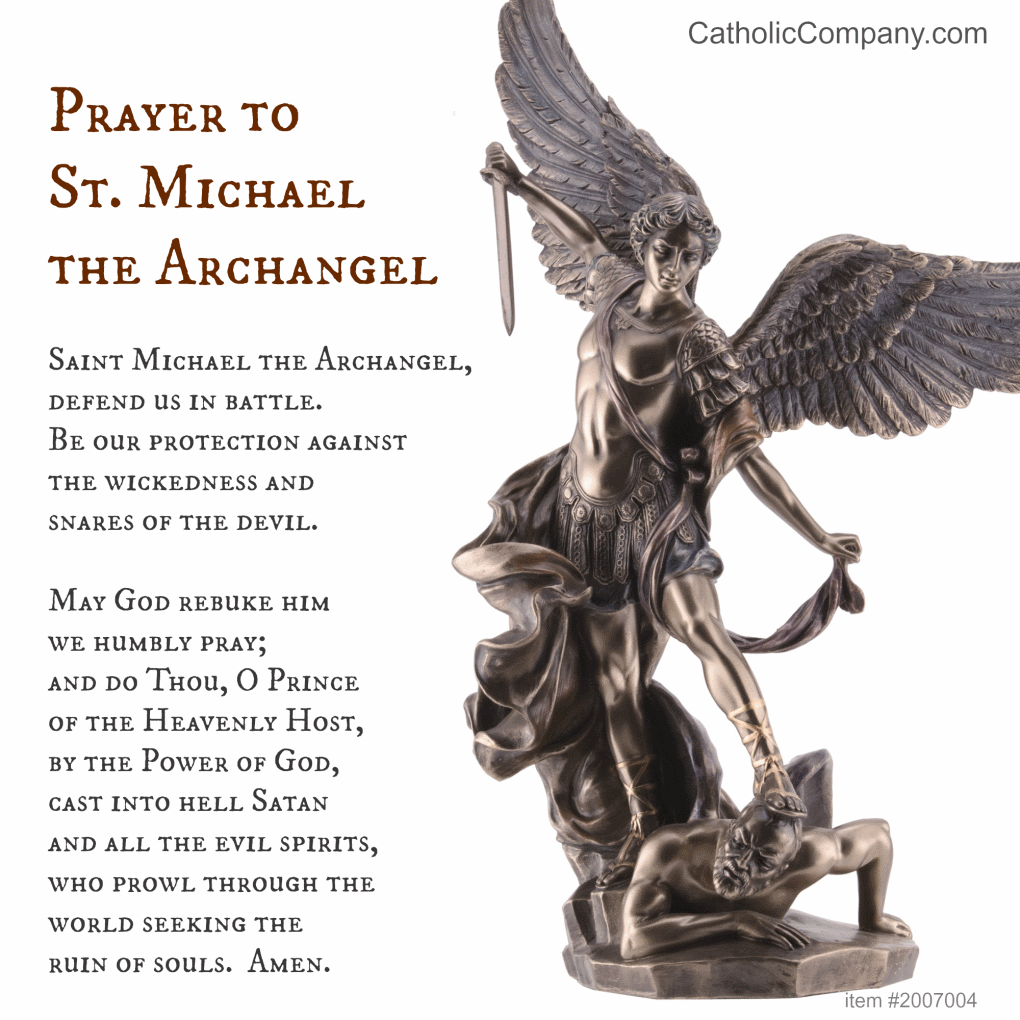
For it is written:, ‘I will destroy the wisdom of the wise,
and the discernment of the discerning I will thwart.’ (1 Cor 1:19)
I have been following a number of speakers on Youtube lately.
Jordan Peterson:
https://www.youtube.com/watch?v=EFWrLx8b2mQ
especially on his view on Free speech and Political Correctness:
https://www.youtube.com/watch?v=iYHpJj-ZJOU
Dr. Sri on Moral Relativism:
https://www.augustineinstitute.org/encounter/
Understanding of Islam and Jihad
(Robert Spencer) https://www.youtube.com/watch?v=SAuS3K5Qdq4
(David Wood) https://www.youtube.com/watch?v=aPBUlZPE95c
This is all part of a discipline that I want to develop in my retirement - to understand the schemes of the devil and to equip myself to face it for the rest of my days.
"Discipline yourselves; keep alert. Like a roaring lion your adversary the devil prowls around, looking for someone to devour." (1 Peter 5:8)
And,
"Therefore, stay awake,
for you know neither the day nor the hour." (Matthew 25:13)
And I pray this every day:
Friday, 24 August 2018
Rabbi, you are the Son of God; you are the King of Israel.
Nathanael uttered these words when he encountered Jesus in John 1:43-51. Today is the feast day of Saint Bartholomew (aka Nathanael). The Morning Offering for today (from The Catholic Company) has this to say about him:
"St. Bartholomew (1st c.) is one of Jesus' Twelve Apostles who, together with his friend and fellow Apostle Philip, came from Cana in Galilee. All we know of St. Bartholomew (also called Nathaniel) is what is mentioned of him in the synoptic Gospels and the book of Acts. Philip told Bartholomew that he had found the Messiah, and, despite Bartholomew's incredulity, the two went together to see Jesus. When Jesus saw Bartholomew he exclaimed, “Here is a true Israelite. There is no duplicity in him!", indicating that Bartholomew possessed great purity of heart. Bartholomew then asked Jesus how he knew him, and Jesus explained that he saw Bartholomew sitting under the fig tree. This secret between Jesus and Bartholomew caused Bartholomew to immediately exclaim that Jesus was the Messiah and the Son of God. According to the Roman Martyrology, Bartholomew became a missionary in the East, preaching and evangelizing in Asia Minor, Ethiopia, India, and finally Armenia, where he was flayed alive and beheaded by King Astyages. St. Bartholomew is the patron saint of nervous and neurological diseases, butchers, leather workers, tanners, cobblers, trappers, and shoemakers. His feast day is August 24th."
In St. John's narrative of this encounter Jesus was quoted in saying, "“Here is truly an Israelite in whom there is no deceit!” indicating that Bartholomew possessed great purity of heart." St. John then documented that "Bartholomew then asked Jesus how he knew him, and Jesus explained that he saw Bartholomew sitting under the fig tree. This secret between Jesus and Bartholomew caused Bartholomew to immediately exclaim that Jesus was the Messiah and the Son of God." Jesus then told him, "“Do you believe because I told you that I saw you under the fig tree? You will see greater things than these.” And he said to him, “Very truly, I tell you, you will see heaven opened and the angels of God ascending and descending upon the Son of Man.”"
What is "this secret between Jesus and Batholomew" that transforms him to become one of Jesus' 12 apostles? Why is Jesus' new Kingdom so much tied to the 12 tribes of Israel (another passage I read this morning is Revelation 21:9-14)? Does the "fig tree" have any significance? What are the "greater things than these"? and the reference to Jacob's dream where he encountered God (Genesis 28:12-15):
"And he dreamed that there was a ladder set up on the earth, the top of it reaching to heaven; and the angels of God were ascending and descending on it. And the Lord stood beside him and said, “I am the Lord, the God of Abraham your father and the God of Isaac; the land on which you lie I will give to you and to your offspring; and your offspring shall be like the dust of the earth, and you shall spread abroad to the west and to the east and to the north and to the south; and all the families of the earth shall be blessed in you and in your offspring. Know that I am with you and will keep you wherever you go, and will bring you back to this land; for I will not leave you until I have done what I have promised you.”"
There are a lot of debates on the comparison between Jacob's dream in Genesis 28:12 and John 1:51. One scholarly paper by David Kirk called "Heaven Opened: Intertexuality and Meaning in John 1:51" is an example of how difficult it is to understand this passage of scripture.
What I get from my reading this morning are these take home points:
"St. Bartholomew (1st c.) is one of Jesus' Twelve Apostles who, together with his friend and fellow Apostle Philip, came from Cana in Galilee. All we know of St. Bartholomew (also called Nathaniel) is what is mentioned of him in the synoptic Gospels and the book of Acts. Philip told Bartholomew that he had found the Messiah, and, despite Bartholomew's incredulity, the two went together to see Jesus. When Jesus saw Bartholomew he exclaimed, “Here is a true Israelite. There is no duplicity in him!", indicating that Bartholomew possessed great purity of heart. Bartholomew then asked Jesus how he knew him, and Jesus explained that he saw Bartholomew sitting under the fig tree. This secret between Jesus and Bartholomew caused Bartholomew to immediately exclaim that Jesus was the Messiah and the Son of God. According to the Roman Martyrology, Bartholomew became a missionary in the East, preaching and evangelizing in Asia Minor, Ethiopia, India, and finally Armenia, where he was flayed alive and beheaded by King Astyages. St. Bartholomew is the patron saint of nervous and neurological diseases, butchers, leather workers, tanners, cobblers, trappers, and shoemakers. His feast day is August 24th."
In St. John's narrative of this encounter Jesus was quoted in saying, "“Here is truly an Israelite in whom there is no deceit!” indicating that Bartholomew possessed great purity of heart." St. John then documented that "Bartholomew then asked Jesus how he knew him, and Jesus explained that he saw Bartholomew sitting under the fig tree. This secret between Jesus and Bartholomew caused Bartholomew to immediately exclaim that Jesus was the Messiah and the Son of God." Jesus then told him, "“Do you believe because I told you that I saw you under the fig tree? You will see greater things than these.” And he said to him, “Very truly, I tell you, you will see heaven opened and the angels of God ascending and descending upon the Son of Man.”"
What is "this secret between Jesus and Batholomew" that transforms him to become one of Jesus' 12 apostles? Why is Jesus' new Kingdom so much tied to the 12 tribes of Israel (another passage I read this morning is Revelation 21:9-14)? Does the "fig tree" have any significance? What are the "greater things than these"? and the reference to Jacob's dream where he encountered God (Genesis 28:12-15):
"And he dreamed that there was a ladder set up on the earth, the top of it reaching to heaven; and the angels of God were ascending and descending on it. And the Lord stood beside him and said, “I am the Lord, the God of Abraham your father and the God of Isaac; the land on which you lie I will give to you and to your offspring; and your offspring shall be like the dust of the earth, and you shall spread abroad to the west and to the east and to the north and to the south; and all the families of the earth shall be blessed in you and in your offspring. Know that I am with you and will keep you wherever you go, and will bring you back to this land; for I will not leave you until I have done what I have promised you.”"
There are a lot of debates on the comparison between Jacob's dream in Genesis 28:12 and John 1:51. One scholarly paper by David Kirk called "Heaven Opened: Intertexuality and Meaning in John 1:51" is an example of how difficult it is to understand this passage of scripture.
What I get from my reading this morning are these take home points:
- God, through His Son Jesus Christ, the incarnate man (Son of Man) has called man to be part of His plan for this world.
- Nathanael, one of the twelve apostles and saints, was chosen because he recognized and believed two important facts: Jesus is the Son of God and the King of Israel (representing the soon to be established Kingdom of God".
- If we earnestly seek Him based on what is known about Him, through what has been revealed to us (exemplified by sitting under the fig tree), with the purity of heart, He will come to us.
- He promises that He will be with us, protect us, and to bring us home to heaven.
- He also promises that through us, His salvation will reach to the ends of the earth.
- Hold on to these promises and act in obedience. That's how we become saints!
Friday, 13 July 2018
Be Wise as Serpents and Innocent as Doves - Revisit
I wrote a blog on this theme on July 14, 2017 - almost exactly the same day last year - after reading the exact scripture passage (Matthew 10:16-23). It was a good read but how have I changed in the past year? In what ways did reading and blogging God's Word change me? There had been many challenges coming from the "wolves" (Matthew 10:16) - the one that stands out is the matter related to "Conscience Protection", especially in Ontario. Praise God, one of the signs of victory was the change of government (the incumbent Liberal government was so defeated that it lost its official party status) and the new Progressive Conservative government had previously promised to write a Conscience Protection clause in the Medical Assistance in Dying (MAiD) Bill. As it stands, health care providers who object to be involved in killing their patients can be prosecuted by their professional college, e.g. if physicians don't make an effective referral for the patients who want to obtain assisted suicide; or nurses who refuse to be part of the killing process.
I had thought that the liturgical calendar attempts to read through the entire bible every 3 years. So why is this scripture passage repeated even within a year? Is it because the message is very important for Christians - are we not all called to take part in the "Great Commission" (Matthew 28:16-20) ? As a recent revert to Catholicism am I not encouraged to take part in the "New Evangelism"? It is interesting that the activists for Secularism is often calling religious people "wolves"! I think they are wolves in sheep clothing!
So Jesus is preparing us for the Great Commission. It is important to understand why He uses serpents and doves for object lessons. I have found the explanation given by GotQuestions.org helpful. I copied a few paragraphs here to serve a reminder for me:
"The serpent simile stands in Jesus’ dialogue without bringing forward any of the serpent’s pejoratives. It is a basic understanding in language that, when a speaker creates a simile, he is not necessarily invoking the entire potential of the words he has chosen—nor is he invoking the entire history and tenor of the linguistic vehicle. Rather, the speaker is defining a fresh relationship between the two things. A quick look at Matthew 10:16 shows that Jesus was invoking only the positive aspects of the serpent. There is no hint of His unloading Edenic baggage upon His disciples. He simply tells them to be wise (and innocent) as they represented Him.
When Jesus told the Twelve to be as wise as serpents and harmless as doves, He laid down a general principle about the technique of kingdom work. As we take the gospel to a hostile world, we must be wise (avoiding the snares set for us), and we must be innocent (serving the Lord blamelessly). Jesus was not suggesting that we stoop to deception but that we should model some of the serpent’s famous shrewdness in a positive way. Wisdom does not equal dishonesty, and innocence does not equal gullibility."
"In His more typical moments, Jesus showed that He was as wise as a serpent in the way He taught. He knew enough to discern the differences in His audiences (a critical skill), He used the story-telling technique to both feed and weed (Matthew 13:10–13), and He refused to be caught in the many traps that His enemies laid for Him (Mark 8:11; 10:2; 12:13).
Jesus showed that He was as harmless as a dove in every circumstance. He lived a pure and holy life (Hebrews 4:15), He acted in compassion (Matthew 9:36), and He challenged anyone to find fault in Him (John 8:46; 18:23). Three times, Pilate judged Jesus to be an innocent man (John 18:38; 19:4, 6)."
I had thought that the liturgical calendar attempts to read through the entire bible every 3 years. So why is this scripture passage repeated even within a year? Is it because the message is very important for Christians - are we not all called to take part in the "Great Commission" (Matthew 28:16-20) ? As a recent revert to Catholicism am I not encouraged to take part in the "New Evangelism"? It is interesting that the activists for Secularism is often calling religious people "wolves"! I think they are wolves in sheep clothing!
So Jesus is preparing us for the Great Commission. It is important to understand why He uses serpents and doves for object lessons. I have found the explanation given by GotQuestions.org helpful. I copied a few paragraphs here to serve a reminder for me:
"The serpent simile stands in Jesus’ dialogue without bringing forward any of the serpent’s pejoratives. It is a basic understanding in language that, when a speaker creates a simile, he is not necessarily invoking the entire potential of the words he has chosen—nor is he invoking the entire history and tenor of the linguistic vehicle. Rather, the speaker is defining a fresh relationship between the two things. A quick look at Matthew 10:16 shows that Jesus was invoking only the positive aspects of the serpent. There is no hint of His unloading Edenic baggage upon His disciples. He simply tells them to be wise (and innocent) as they represented Him.
When Jesus told the Twelve to be as wise as serpents and harmless as doves, He laid down a general principle about the technique of kingdom work. As we take the gospel to a hostile world, we must be wise (avoiding the snares set for us), and we must be innocent (serving the Lord blamelessly). Jesus was not suggesting that we stoop to deception but that we should model some of the serpent’s famous shrewdness in a positive way. Wisdom does not equal dishonesty, and innocence does not equal gullibility."
"In His more typical moments, Jesus showed that He was as wise as a serpent in the way He taught. He knew enough to discern the differences in His audiences (a critical skill), He used the story-telling technique to both feed and weed (Matthew 13:10–13), and He refused to be caught in the many traps that His enemies laid for Him (Mark 8:11; 10:2; 12:13).
Jesus showed that He was as harmless as a dove in every circumstance. He lived a pure and holy life (Hebrews 4:15), He acted in compassion (Matthew 9:36), and He challenged anyone to find fault in Him (John 8:46; 18:23). Three times, Pilate judged Jesus to be an innocent man (John 18:38; 19:4, 6)."
"In Matthew 10:16, Jesus taught us how to optimise our gospel-spreading opportunities. Successful Christian living requires that we strike the optimal balance between the dove and the serpent. We should strive to be gentle without being pushovers, and we must be sacrificial without being taken advantage of. We are aware of the unscrupulous tactics used by the enemy, but we take the high road. Peter admonishes us, “Live such good lives among the pagans that, though they accuse you of doing wrong, they may see your good deeds and glorify God on the day he visits us” (1 Peter 2:12)."
I was quite involved with the Conscience Protection campaign last year - helping my wife making presentations in churches, marching to Queen's Park, and writing to MPP's etc. I am learning from many other members of the Body of Christ and supporting their actions. I pray that Jesus' lesson on being a better serpent and a better dove will both increase my virtues and avoid vices.
Subscribe to:
Posts (Atom)